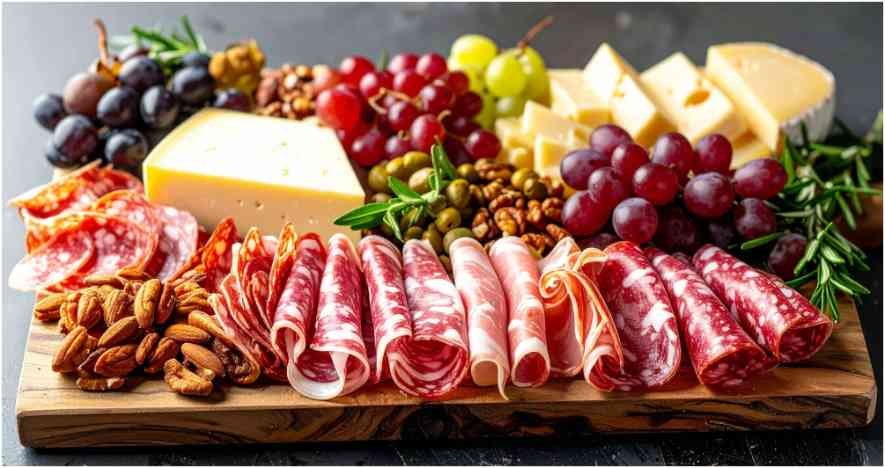
The best charcuterie board ingredients do more than look pretty on a tray. They create contrast, give every guest something easy to grab, and make a simple gathering feel planned without feeling stiff.
When I build a board, I think in flavors first: salty meat, creamy cheese, crisp crackers, sweet fruit, crunchy nuts, and one sharp or briny surprise. That simple mix keeps the board balanced and stops it from tasting heavy after three bites.
Why the Best Charcuterie Board Ingredients Start With Balance
A good charcuterie board should never feel like a pile of expensive snacks. It should feel intentional. The easiest way to get there is to balance fat, salt, acid, crunch, and sweetness.
Cured meats bring salt and richness. Cheese adds creaminess, sharpness, or nuttiness. Crackers and bread carry the toppings. Fruit, pickles, olives, nuts, and spreads keep every bite from feeling too fatty.
I also build boards by movement. Soft items need sturdy crackers. Salty meats need fruit or jam. Sharp cheese needs something mild beside it. Once I started thinking this way, my boards looked better and tasted better.
The 3-3-3 Rule for a Better Charcuterie Board
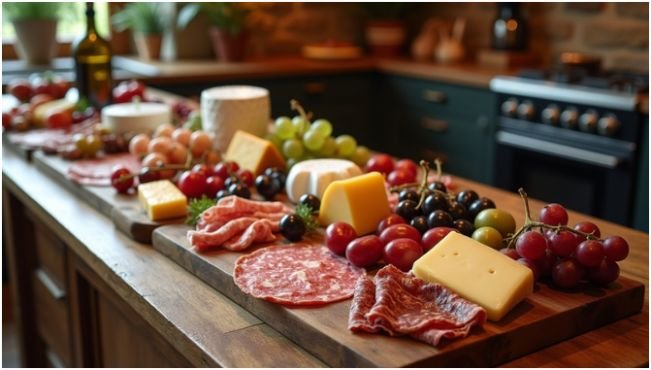
The 3-3-3 rule is my favorite starting point for beginners. It means choosing three cured meats, three cheeses, and three accompaniments. This gives enough variety without making the board feel crowded or confusing.
You can scale it up for a party or down for a date night. The rule works because it gives structure while still leaving room for personality.
3 Cured Meats for Flavor and Texture
Prosciutto di Parma is my first pick when I want elegance without effort. It folds beautifully, tastes salty and delicate, and pairs well with Brie, melon, figs, or pears.
Genoa salami adds a mild garlic flavor and a firmer bite. I like folding slices into quarters or ruffling them in a line because they add height to the board.
Spicy soppressata brings heat and color. It works well near sharp cheddar, smoked Gouda, olives, mustard, and pickles. I use it when the board needs a bold bite.
For a stronger board, avoid choosing three meats with the same texture. One silky, one mild, and one spicy gives better contrast.
3 Cheeses That Cover Every Bite
For soft cheese, I usually choose Brie or Boursin. Brie feels creamy and classic, while garlic-and-herb Boursin spreads easily on crackers and baguette slices.
For firm cheese, aged white cheddar or smoked Gouda works well. Cheddar gives sharpness, while smoked Gouda adds a rich, nutty flavor.
For hard cheese, Manchego or Parmigiano-Reggiano adds bite and texture. I prefer breaking hard cheese into chunks instead of slicing it. It looks more natural and feels easier to snack on.
This soft-firm-hard cheese method is one of the simplest ways to choose the best charcuterie board ingredients without overthinking the cheese case.
3 Accompaniments That Keep the Board Interesting
My core three are fruit, nuts, and something briny. Grapes, apple wedges, berries, pears, or fresh figs add freshness and color. Marcona almonds, pistachios, walnuts, or candied pecans give crunch.
For briny bites, I like cornichons, Kalamata olives, green olives, or marinated artichoke hearts. These ingredients cut through rich meats and cheeses fast.
Spreads also matter. Fig jam, honey, grainy Dijon mustard, or pepper jelly can change the whole board. A small jar makes the board feel generous without taking much space.
Best Crackers, Bread, and Gluten-Free Board Swaps
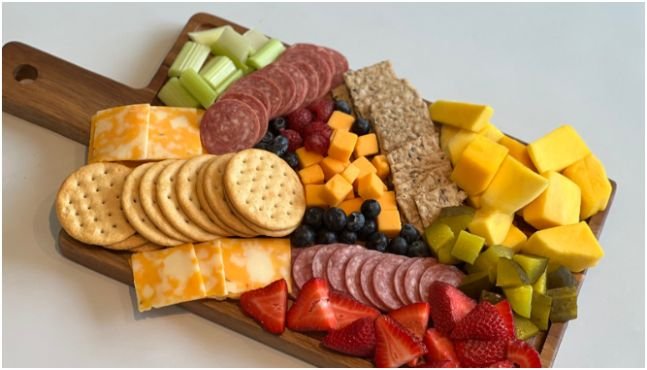
Crackers and bread are not filler. They are the vehicles. The wrong cracker breaks under cheese. The wrong bread turns chewy or dry. I like mixing shapes and textures so the board feels layered.
Sea salt water crackers are clean and simple. Rosemary crisps add aroma. Baguette rounds work beautifully with soft cheeses and spreads. Toasted crostini holds heavier toppings better than soft bread.
I also like brushing baguette slices with a little best gourmet olive oil before toasting them. It gives the board a subtle restaurant-style finish without much effort.
Gluten-Free Crackers and Bread That Actually Hold Up
A gluten-free charcuterie board is easy if you separate wheat-based items and check labels. Most core foods, including plain meats, cheeses, fruits, nuts, and olives, are naturally gluten-free. The biggest change is replacing crackers and bread.
Seed-based crackers, almond flour crackers, gluten-free pretzels, and toasted gluten-free baguette slices work well. I like seed crackers because they have strong structure and do not collapse under Brie or jam.
The FDA says foods labeled gluten-free must meet its gluten-free labeling rule, including the limit of less than 20 parts per million of gluten. That makes label reading essential for guests with celiac disease or gluten sensitivity.
Hidden Gluten Traps to Check Before Serving
Gluten can hide in processed meats, flavored cheeses, beer-washed cheeses, malt vinegar pickles, mustard, spreads, and flavored nuts. I check labels on anything marinated, flavored, smoked, or processed.
Cross-contact also matters. If I serve gluten-free guests, I use a separate board, separate knives, separate tongs, and a separate cracker bowl. Crumbs travel fast, especially on crowded boards.
Sweet, Salty, Crunchy, and Briny Add-Ons
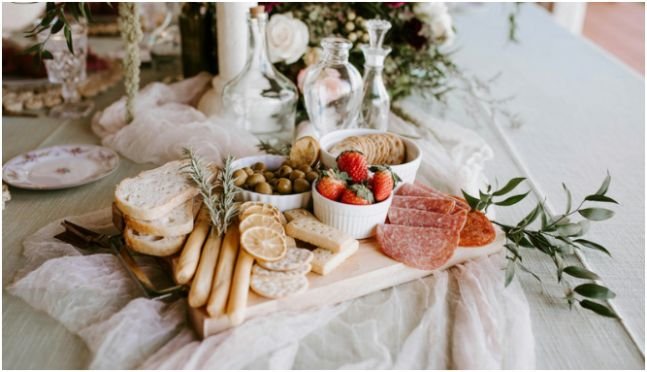
The strongest boards have little surprises. Fresh fruit makes the board feel bright. Dried apricots, cranberries, dates, or figs add chewy sweetness. Nuts bring crunch and help fill gaps.
Pickles and olives keep the board from tasting too rich. Cornichons are especially useful because they are small, sharp, and easy to place in corners. Marinated artichokes also add a savory, restaurant-style touch.
For a sweeter board, add honeycomb, dark chocolate squares, or candied pecans. For a savory board, add roasted peppers, grainy mustard, spiced nuts, and herbed cheese.
The best charcuterie board ingredients are not always the most expensive ones. They are the ones that give each bite a different texture or flavor.
My Worked Example: A Crowd-Friendly Charcuterie Board
For six to eight people, I would use prosciutto, Genoa salami, and spicy soppressata. Then I would add Brie, aged white cheddar, and Manchego.
For crackers, I would use rosemary crisps, water crackers, and toasted baguette slices. If one guest needs gluten-free options, I would add a separate plate with seed crackers, almond flour crackers, and gluten-free pretzels.
Then I would fill the board with grapes, apple wedges, berries, Marcona almonds, pistachios, cornichons, olives, fig jam, and Dijon mustard.
My tested trick is to place the cheeses first, then the meats, then bowls, then crackers, then fruit, nuts, and small fillers. This creates a full board without buying too much food. If I add crackers first, I usually waste space.
Food Safety Tips for Charcuterie Boards
Charcuterie boards sit out while people talk, snack, and come back for seconds. That makes food safety part of good hosting.
USDA guidance says perishable foods should not stay in the “danger zone” between 40°F and 140°F for more than two hours, or more than one hour when the temperature is above 90°F.
University of Nebraska-Lincoln Extension also recommends keeping cut produce and cheeses refrigerated until serving and limiting room-temperature time to two hours total. It also advises clean hands, clean surfaces, separate utensils, and washed produce.
I keep backup meats and cheeses in the fridge instead of overloading the board. After about 90 minutes, I refresh small sections instead of letting everything sit out too long.
Deli meats also need care. The CDC notes that Listeria can grow on foods kept in the refrigerator, and deli meats can be a concern during outbreaks or recalls. I check recall notices, keep meats cold, and avoid serving risky deli items to pregnant guests, older adults, or immune-compromised guests unless they are handled safely.
Final Bite: Build the Board, Own the Table
The best board does not need twenty fancy ingredients. It needs smart contrast. Start with the 3-3-3 rule, add sturdy crackers, use fruit for freshness, bring in briny bites, and keep gluten-free guests safe with separate tools and labeled products.
My final tip is simple: choose one “wow” ingredient and let everything else support it. That could be Prosciutto di Parma, a beautiful Brie wheel, honeycomb, Marcona almonds, or a premium olive oil crostini. Build around that, and your board will look generous without feeling random.
FAQs About the Best Charcuterie Board Ingredients
1. What are the best charcuterie board ingredients for beginners?
The best charcuterie board ingredients for beginners are prosciutto, salami, Brie, cheddar, Manchego, crackers, grapes, nuts, olives, pickles, and fig jam. These items are easy to find and easy to pair.
2. What is the 3-3-3 rule for charcuterie boards?
The 3-3-3 rule means using three meats, three cheeses, and three accompaniments. It helps beginners build a balanced board without buying too many random items.
3. What meats are best for a charcuterie board?
Prosciutto, Genoa salami, soppressata, capicola, chorizo, and bresaola all work well. I like mixing mild, salty, and spicy meats for better variety.
4. What cheeses go best on a charcuterie board?
A strong board usually includes one soft cheese, one firm cheese, and one hard cheese. Brie, Boursin, aged cheddar, smoked Gouda, Manchego, and Parmigiano-Reggiano are reliable choices.