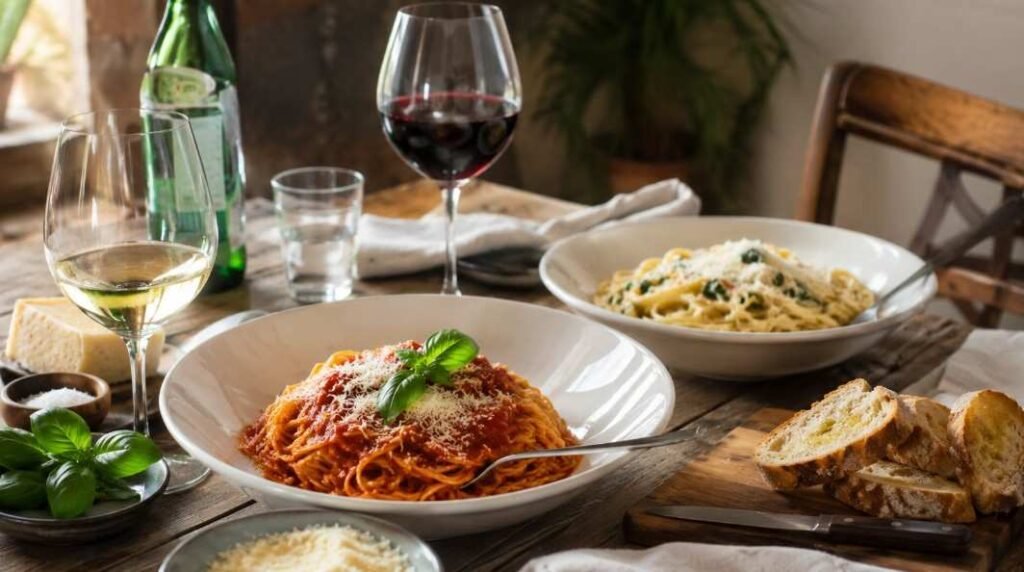
A good pasta night feels like comfort, conversation, and a little celebration in one bowl. The easiest way to make it taste restaurant-level is simple: pasta wine pairing begins with the sauce, not the noodle. Once that clicks, every sip feels more natural, balanced, and delicious.
What Is Pasta Wine Pairing?
Pasta wine pairing is the art of matching your pasta dish with a wine that supports its sauce, texture, and flavor. A light lemon linguine needs something very different from a slow-cooked ragù, because wine should echo, balance, or refresh the food on the plate.
The best wine for pasta depends entirely on your sauce. Match light, delicate dishes with crisp whites, and pair rich, heavy, or meat-based sauces with bold reds. The sauce’s acidity, fat, and weight should harmonize with the wine’s characteristics.
Think of wine as part of the meal’s rhythm. Acidity brightens tomato sauce, bubbles lift cheese, gentle tannins handle meat, and herbal whites flatter basil, parsley, and vegetables. That is why sauce-first pairing feels practical, not fussy.
Pairing By Sauce Type
These classic sauce groups make pasta wine pairing easy, repeatable, and useful for real dinners.
Tomato And Marinara
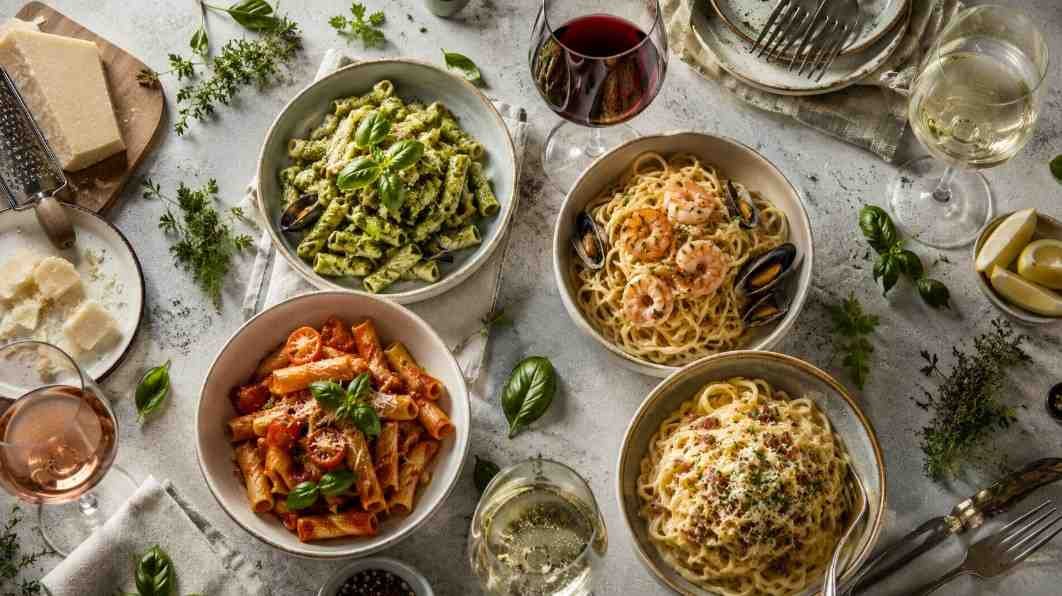
Tomato and marinara sauces are bright, tangy, and naturally acidic, so they need medium-bodied reds with enough freshness to keep up. Chianti, Sangiovese, and Barbera are top picks because their lively acidity mirrors tomato instead of fighting it.
This pairing works beautifully with spaghetti marinara, penne pomodoro, arrabbiata, baked ziti, and pizza-style pasta bakes. For spicy tomato sauces, choose Barbera or a juicy Sangiovese rather than a high-alcohol red, because heat can make alcohol feel sharper.
Meat, Bolognese, And Ragù
Meat sauces bring fat, depth, slow-cooked sweetness, and savory richness. Bolognese, ragù, sausage pasta, and lasagna need wines with body, tannins, and structure to cut through the richness without flattening the dish.
Cabernet Sauvignon, Merlot, Syrah, and fuller Italian reds work well here. Sangiovese and Montepulciano are also smart choices when tomato remains important. The goal is balance: enough grip for the meat, enough acidity for the sauce.
Cream And Cheese
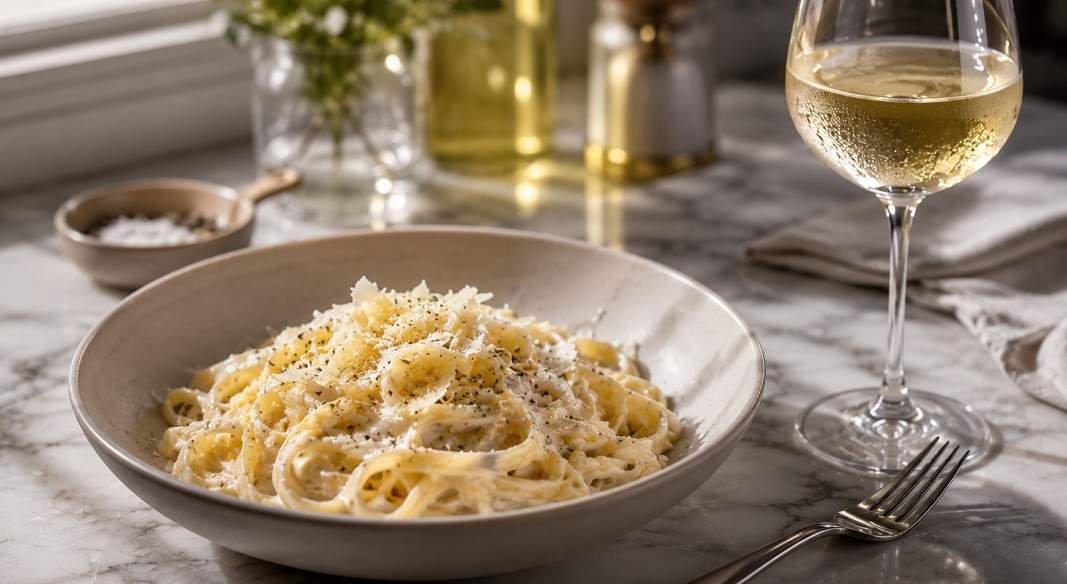
Cream and cheese sauces are plush, salty, and rich, so freshness matters. Alfredo, carbonara, cacio e pepe, and four-cheese pasta need crisp dry whites or lighter reds that cleanse the palate between bites.
Chardonnay, Pinot Grigio, and light Pinot Noir are reliable top picks. A dry sparkling wine is also excellent because bubbles slice through butter, cheese, egg, and cream while keeping the meal lively.
Pesto And Vegetable
Pesto and vegetable pasta lean fresh, green, nutty, and aromatic. Basil, olive oil, garlic, zucchini, asparagus, spinach, and peas all pair best with light-bodied whites that have bright herbal, citrus, floral, or mineral notes.
Sauvignon Blanc, Vermentino, and Verdicchio are top choices. These wines echo herbs and vegetables while refreshing the olive oil and cheese. Dry rosé also works when grilled vegetables or sun-dried tomatoes add extra depth.
Seafood Pasta
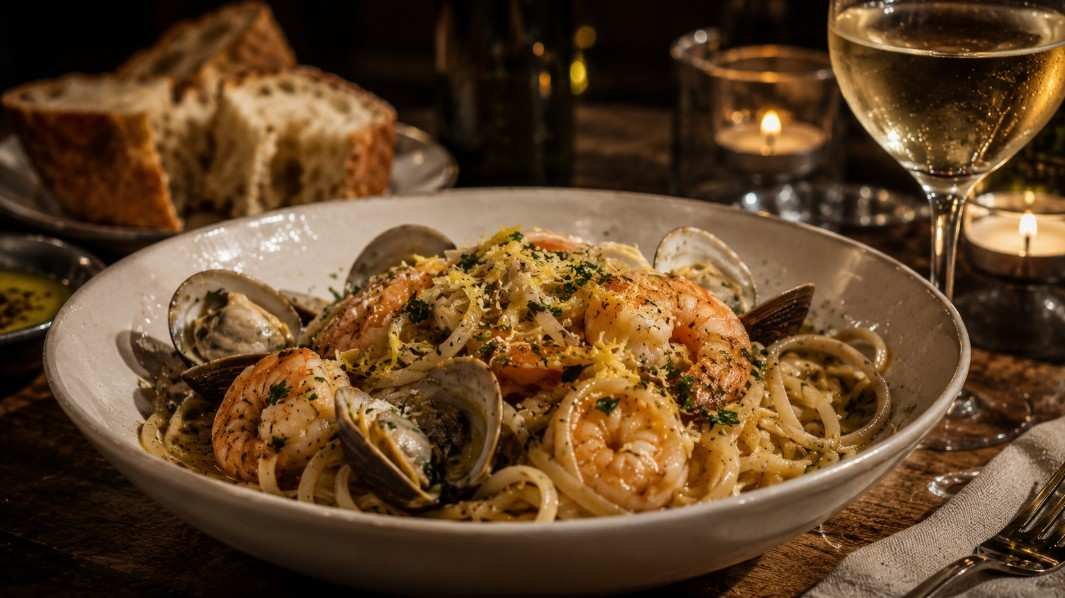
Seafood pasta is delicate, briny, and often lifted by lemon, garlic, herbs, or olive oil. Lean, crisp whites are best because they complement ocean flavors without overpowering shrimp, clams, crab, scallops, or white fish.
Pinot Grigio, Muscadet, and Picpoul de Pinet are excellent top picks. Vermentino and Verdicchio also shine with linguine alle vongole, shrimp scampi, and seafood spaghetti because they feel clean, salty, and refreshing.
| Sauce Type | Best Wine Style | Top Wine Picks |
| Tomato And Marinara | Medium-Bodied Red, High Acidity | Chianti, Sangiovese, Barbera |
| Meat And Ragù | Fuller Red, Moderate Tannins | Cabernet Sauvignon, Merlot, Syrah |
| Cream And Cheese | Crisp White Or Light Red | Chardonnay, Pinot Grigio, Pinot Noir |
| Pesto And Vegetable | Herbal White, Light Body | Sauvignon Blanc, Vermentino, Verdicchio |
| Seafood | Lean Crisp White | Pinot Grigio, Muscadet, Picpoul De Pinet |
How To Use Pasta Wine Pairing At Home
Real-life pairing should feel relaxed, not like a test.
Step One: Read The Sauce
Start by asking what dominates the plate. Tomato brings acidity, cream brings fat, meat brings weight, pesto brings herbs, and seafood brings delicacy. That first clue tells you whether the wine should be bright, rich, bold, herbal, or crisp.
For a weeknight bowl, do not overthink pasta shapes. Spaghetti, rigatoni, ravioli, and linguine matter less than what coats them. The sauce tells the truth, and the wine follows.
Step Two: Match Weight And Texture
Light dishes need lighter wines. Heavy dishes need wines with more body. A lemony seafood linguine feels best with a clean white, while baked lasagna can handle a deeper red with tannins and dark fruit.
Texture matters too. Creamy sauces need acidity or bubbles. Meaty sauces need structure. Oily sauces need freshness. Cheesy sauces need a palate cleanser so the next bite tastes as good as the first.
Step Three: Serve And Sip Mindfully
Serve whites cool, not icy, so their aromas stay alive. Serve lighter reds slightly chilled, especially with tomato or spicy pasta. Full reds should be comfortable, not warm, because heat can make alcohol feel heavy.
Enjoy wine with food, water, and conversation. In beverage culture, wine is not just about the bottle. It is about pacing the meal, sharing the table, and letting flavors unfold slowly.
For hosting, this approach also saves money. Buy one bright white, one medium Italian red, and one dry sparkling bottle, then build wine and food pairings around sauces instead of chasing rare labels. Guests get choice, dinner feels curated, and the table stays friendly, flexible, and fun. That is smart beverage culture at home. It also makes shopping easier, especially for casual weeknights, date nights, and relaxed dinner parties everywhere.
Healthy Wine Habits
Wine can fit into a thoughtful food lifestyle when enjoyed carefully.
Choose Dry And Balanced
Dry wines are usually better for pasta because they refresh savory flavors without making the dish taste sugary. They also tend to contain less residual sugar than sweet wines, which can be useful for people watching sugar intake.
Red wine contains polyphenols, and wine is often discussed within Mediterranean dining patterns. Still, wine is not medicine. The healthiest approach is moderate portions, balanced meals, hydration, and avoiding alcohol when health, pregnancy, medication, or personal preference requires it.
Keep The Plate Balanced
Pasta feels better when the whole plate has balance. Add vegetables, lean protein, olive oil, herbs, and sensible portions, then choose a wine that supports the meal rather than dominates it.
For richer pasta, pour a smaller glass and let acidity do the work. For lighter pasta, choose crisp wines or alcohol-free alternatives. Sparkling water with lemon, unsweetened iced tea, or alcohol-free wine can still feel intentional.
Frequently Asked Questions
1. Which Wine Goes Well With Pasta?
The best wine depends on the sauce. Tomato pasta likes Chianti or Sangiovese, cream pasta likes Chardonnay or Pinot Grigio, pesto likes Sauvignon Blanc, and seafood pasta likes Muscadet or Pinot Grigio.
2. Which Wine Is Best For Diabetics?
Dry wines are generally lower in sugar than sweet wines, but diabetes needs personal medical guidance. Alcohol can affect blood sugar, especially with medication or without food, so ask a healthcare professional.
3. What Drink Goes With Italian Pasta?
Italian pasta pairs with Chianti, Sangiovese, Pinot Grigio, Vermentino, dry rosé, sparkling wine, sparkling water, bitter sodas, or alcohol-free wine. Choose the drink based on sauce weight and flavor.
4. Is Pasta Eaten With Red Or White Wine?
Pasta is eaten with red or white wine. Red suits tomato, meat, and baked pasta. White suits cream, seafood, pesto, lemon, and vegetable pasta. Rosé and sparkling wine are flexible options.
Final Sip, Happy Twirl
Great pasta wine pairing is really sauce wisdom in a glass. Match acidity, fat, herbs, seafood, and richness with the right wine style, then enjoy the meal slowly. With a sauce-first mindset, every bowl feels brighter, warmer, and more delicious.